
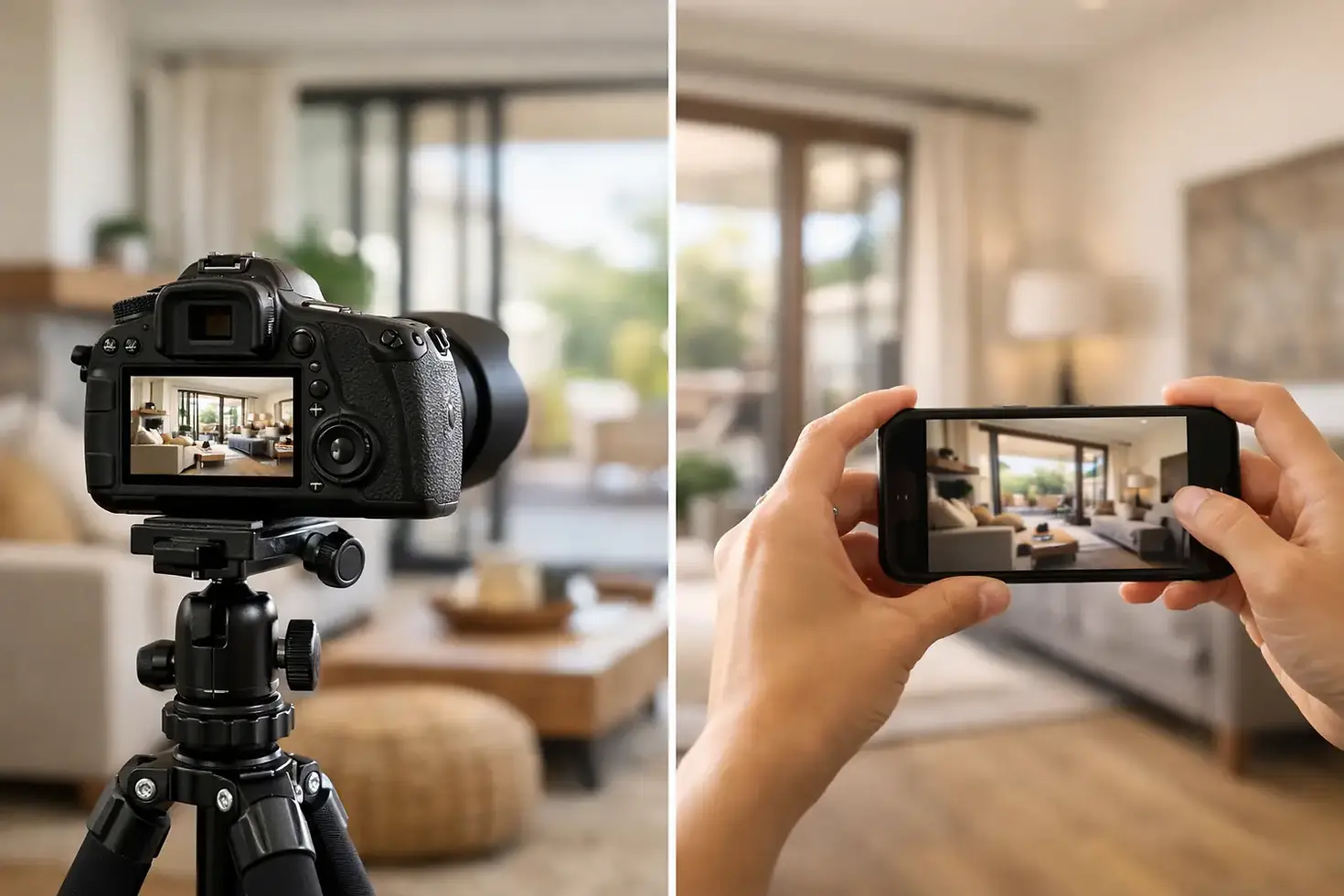
Airbnb Photography Versus Phone Pictures
- Daniel Potter
- Jun 17
- 6 min read
A listing can have the right price, strong reviews and a good location, yet still underperform because the photos make guests hesitate. That is the real issue behind Airbnb photography versus mobile phone pictures. Guests decide fast, and if the first few images feel dark, cramped or inconsistent, they often move on before reading a word of the description.
For hosts, this is not really a debate about cameras. It is a business decision about how your property is perceived in a crowded search page. Mobile phone cameras are far better than they used to be, but better technology has not removed the gap between a quick set of snaps and a set of images planned to sell a stay.
Why Airbnb photography versus mobile phone pictures matters
Guests are not inspecting your property the way you do in person. They are scanning dozens of listings on a small screen, comparing brightness, layout, cleanliness and overall confidence. Photos do two jobs at once - they show the space, and they signal how professionally the property is managed.
That second part is often missed. A well-photographed listing suggests care, consistency and attention to detail. Soft, wonky or poorly lit mobile phone images can suggest the opposite, even if the property itself is excellent. It is not always fair, but it is how people make decisions online.
Professional photography also helps control expectations. If a room is compact, a good photographer will present it honestly while still making it feel inviting. If a space has strong natural light, texture or character, those strengths can be brought forward without making the place look misleading. That balance matters because clicks are useful, but bookings that turn into poor reviews are not.
Where mobile phone pictures usually fall short
The biggest weakness with mobile phone photography is not the device itself. It is the process around it. Most hosts take pictures quickly, often after finishing a clean, using whatever light is available and without much thought to lens distortion, composition or consistency from room to room.
Mobile phones also tend to struggle with dynamic range in real property settings. A room with a bright window and darker interior is a classic example. The view outside blows out, or the inside becomes muddy. You may still think the photo looks acceptable because you know the room already. A guest seeing it for the first time may just read it as gloomy.
Wide-angle mobile phone lenses create another issue. They can make edges bend, walls lean and proportions feel odd. That may sound minor, but in property marketing it affects trust. If a space looks stretched or warped, viewers may wonder what else is being exaggerated.
Then there is consistency. One room might be shot in daylight, another under warm lamps, another from standing height with clutter half-hidden out of frame. The result feels pieced together rather than intentional. Guests may not consciously analyse this, but they notice the overall impression.
What professional Airbnb photography actually changes
Professional property photography is less about expensive equipment and more about control. The photographer controls light, framing, vertical lines, room flow and edit quality so the full listing feels coherent.
A good shoot starts before the camera is raised. Rooms are assessed for angle, distractions, natural light direction and the order they should appear in. That sounds simple, but it changes everything. The goal is not to take as many photos as possible. The goal is to create the clearest visual argument for booking the property.
Professional editing then finishes the job. This should not mean artificial skies, extreme saturation or heavily altered interiors. It should mean balanced exposure, accurate white balance, clean lines and true-to-life presentation. The best result is usually the one that feels polished without feeling manipulated.
For some properties, drone images can add value too, especially when the setting is part of the offer. If guests are booking because of proximity to the waterfront, countryside access, parking, or a standout building position, aerial views can provide useful context. They are not needed for every listing, but in the right case they strengthen the booking decision.
When mobile phone pictures can be good enough
There are cases where mobile phone images are perfectly reasonable. If you are testing a new listing before investing more, letting a room short-term on a very modest budget, or updating one or two minor images between full shoots, a modern mobile phone can do a decent job.
They can also work when the property is extremely simple to photograph - bright rooms, clean design, large windows and no awkward layouts. Add careful staging, tidy surfaces and some patience, and the results may be serviceable.
But good enough is not the same as competitive. If nearby listings are using stronger photography, your mobile phone images do not need to be bad to lose ground. They only need to be slightly less convincing. In busy markets, that is often enough to affect click-through rate and booking volume.
The cost question hosts actually care about
Most hosts are not asking whether professional photography looks better. They know it does. The real question is whether it pays back.
Usually, it depends on your occupancy, nightly rate and how often the property is booked. A one-off spend on professional images can make sense if better photos help increase bookings, support a higher nightly rate or reduce gaps in the calendar. Even a modest uplift can justify the cost surprisingly quickly.
It also depends on how important the listing is to your income. If your Airbnb is a serious revenue stream rather than an occasional side let, weak images become a false economy. Saving money on photography while losing bookings is not efficient.
For budget-conscious hosts, transparent pricing matters here. A straightforward service model with a clear base fee and optional image selection tends to suit real-world hosting better than inflated all-in packages. It lets owners improve the listing without committing to unnecessary extras.
Presentation is not just photography
Even the best photographer cannot rescue a poorly prepared property. Cleanliness, styling and maintenance still matter. Creased bedding, visible cables, mismatched bulbs, half-empty toiletries and bins tucked just out of sight all show up in photos.
The practical fix is simple. Prepare the property as if your most selective guest is arriving in an hour. Open the curtains fully, replace dead bulbs, remove duplicate furniture if a room feels tight, and keep surfaces purposeful rather than empty or cluttered. A few well-placed touches work better than trying to decorate every corner.
This is where professional guidance helps. An experienced property photographer will usually spot the small adjustments that improve a room quickly - moving a chair, turning on the right lamps, changing the shooting angle, or removing items that distract from space and function.
Airbnb photography versus mobile phone pictures for different property types
Not every property needs the same approach. A city-centre studio relies heavily on accurate framing and smart composition because every metre counts. A family home benefits from showing flow between rooms and the practical use of space. A premium short-term let needs images that support a higher perceived value, which means detail shots, exterior presentation and strong editing matter more.
If your property has a selling point beyond the interior, professional visuals become even more useful. Views, gardens, parking, nearby landmarks and architectural character all benefit from deliberate photography. In parts of Merseyside and Greater Manchester, local knowledge can help too, especially when timing exterior shots around weather, traffic or light makes a visible difference.
How to decide what is right for your listing
The simplest test is to compare your current images with the strongest competing listings in your area. Not just the worst ones - the best ones. If your photos feel darker, less consistent or less trustworthy, that is the answer.
You should also ask whether your current images match the price you want to charge. Guests expect a visual standard that fits the rate. If the property is positioned as clean, comfortable and well-run, the photography should reinforce that claim immediately.
Finally, consider your own time. Taking decent mobile phone photos, editing them, reordering them and second-guessing the results often takes longer than hosts expect. A professional shoot reduces that friction and gives you assets you can use across booking platforms and marketing materials.
Liverpool Visuals sees this regularly with short-term lets: owners often come in thinking they need better camera gear, when what they really need is better visual planning, cleaner presentation and a faster route to publishable images.
The right photos should make a guest feel clear, confident and ready to book. If your current pictures are only showing the space instead of selling the stay, that is usually the point where professional photography starts earning its keep.


Comments